
Who Actually Buys Robots First
Not the companies that talk about robots, but the ones that sign the renewal.

“Reality is that which, when you stop believing in it, doesn’t go away.” — Philip K. Dick
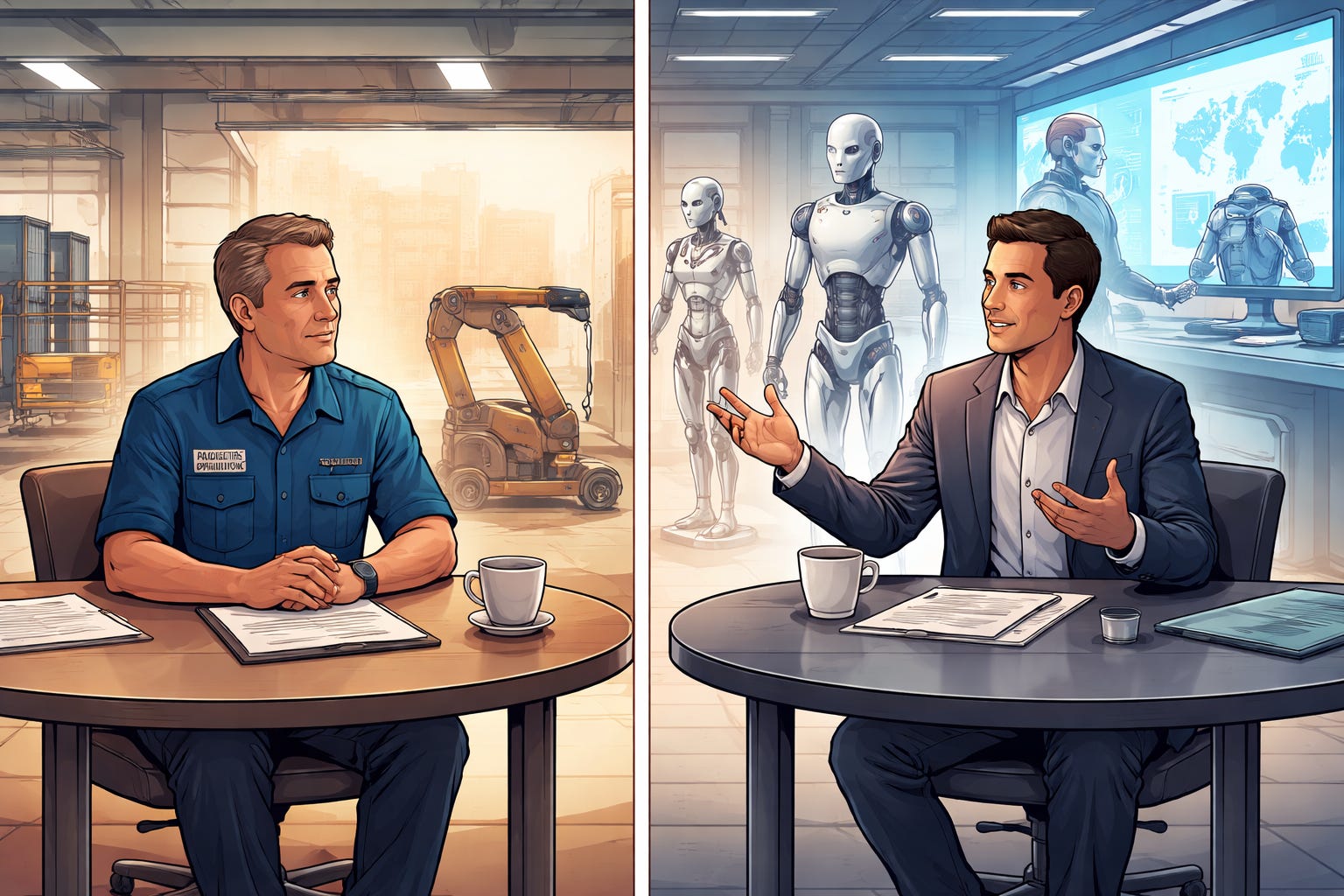
He arrived ten minutes early and sat quietly, folding his hands on the conference table as if he were waiting for a dentist. His badge said Facilities Operations, which in this building meant that when something broke at three in the morning, it became his problem. He did not talk about the future. He did not mention artificial intelligence. He asked instead whether the robot could still complete its task if the Wi-Fi went down.
Across town—sometimes across the continent—there was another kind of buyer. This one rarely arrived early. He spoke in metaphors. He used terms such as platform, ecosystem, and general-purpose. He had seen the demonstration video twice and wanted to discuss scale.
These two men—though they are not always men—are often mistaken for participants in the same market. They are not. They inhabit parallel economies that occasionally intersect, like subway lines sharing a station but heading in opposite directions.
The first buyer does not think of himself as buying a robot. He believes he is avoiding more injuries, fewer overtime hours, and fewer apologies to his supervisor. The robot is incidental—an appliance, really, like a forklift or an HVAC unit that happens to move. When it works, no one notices. When it fails, someone fills out a form.
He asks questions that sound dull until you realize they are existential. Who trains the night shift? How long before the staff stops calling you? What happens when the robot hesitates—not crashes, just hesitates—and a human steps in to finish the job? Who owns that decision?
The second buyer believes he is buying the future. He imagines the robot not as a tool but as a signal, proof that his organization understands where the world is going. He is less interested in whether the robot works on Tuesday than in whether it could, someday, do something else entirely. His questions are expansive. Could this be deployed across all sites? Could it learn new tasks? Could it replace something larger, something more difficult to describe?
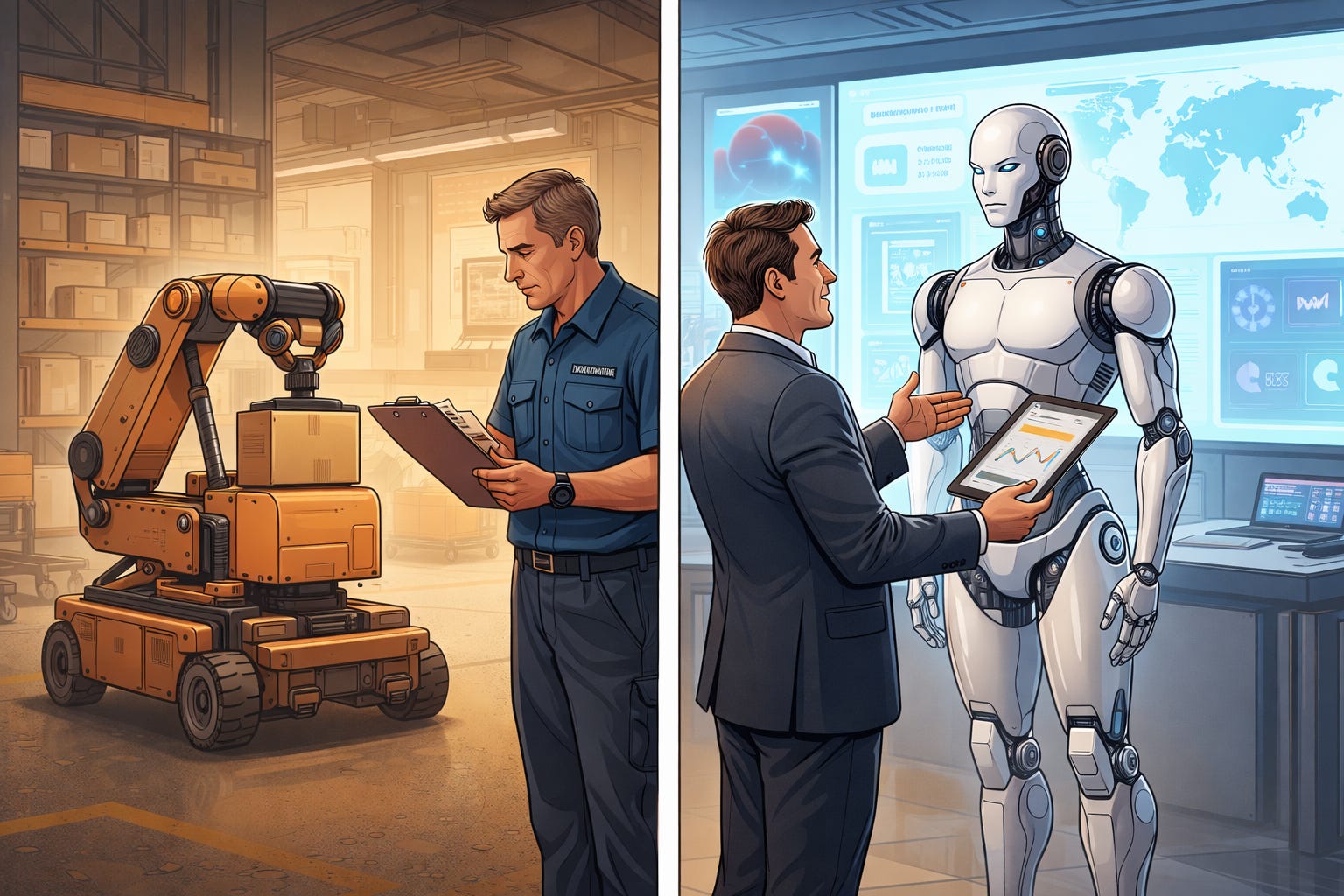
Between these two buyers lies the quiet graveyard of robotics promises.
The robots that survive are typically selected by the first buyer. They are uncharismatic machines. They do not look like people. They do not give interviews. They do one thing, then do it again, and then do it a thousand more times, under fluorescent lights, while no one is watching. Their success is measured not in headlines but in renewals.
The robots that fail are often beloved by the second buyer. They photograph beautifully. They inspire panels and podcasts. They appear in investor decks with upward-pointing arrows. And then, slowly, they disappear—not with a scandal, but with a shrug. The pilot ends. The funding round closes. The robot is returned to its crate.
This is not because the visionary buyer is foolish. This is because his logic does not govern physical systems. Venture logic prizes optionality; procurement logic punishes it. The more a robot might do, the harder it is to insure, train, certify, and explain. Ambiguity, so useful in software, becomes a liability when machines move through human space.
The first buyer understands this intuitively. He does not want a robot that can do everything. He wants one that fails predictably. He wants manuals, not manifestos. He wants to know whom to call, and whether that person will answer.
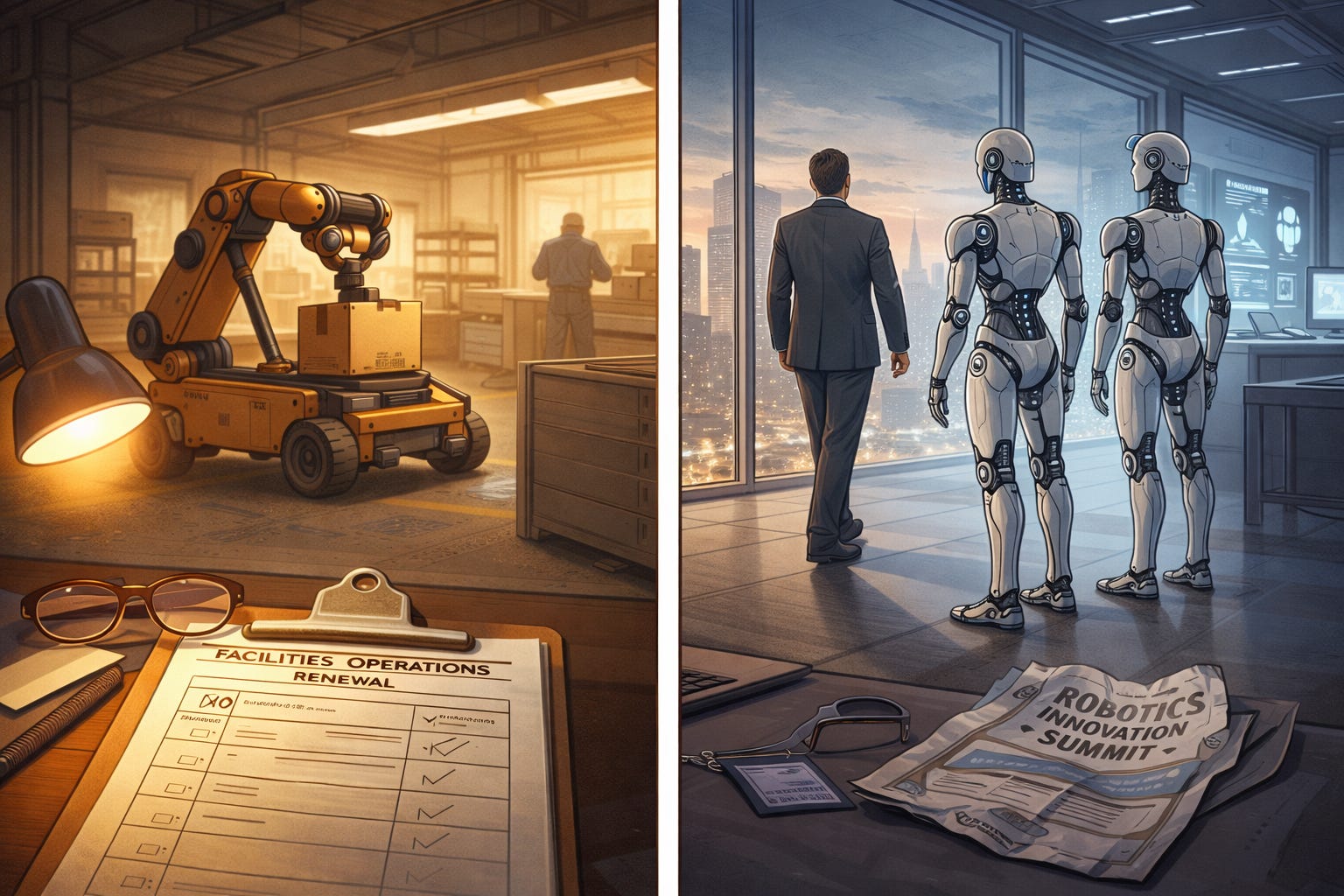
In robotics, progress does not announce itself. It signs contracts. It renews service agreements. It shows up quietly on balance sheets, injury reports, and staffing plans. The future of robots is being decided not by those who speak most eloquently about it, but by those who ask, in unadorned language, what happens when the machine stops moving.
They are not buying dreams. They are buying Tuesdays.
Robot News Of The Week
Waymo keeps foot on the autonomous vehicle pedal with $16B funding
Even as humanoids and generative AI dominate headlines, autonomous vehicles are quietly accelerating. Waymo just raised $16B, pushing its valuation to $126B and fueling rapid expansion across the U.S. and globally. Robotaxi services are scaling to new cities, airports, and international markets, backed by growing hiring and operational momentum. Waymo reports 127M autonomous miles driven and major reductions in injury and insurance claims, including findings from Swiss Re. Recent recalls and investigations underscore that risk isn’t eliminated—but investors are betting that data, scale, and deployment experience will define the next phase of the AV race.
National Commission on Robotics Act bipartisan legislation introduced in Congress
Reps. Jay Obernolte, Jennifer McClellan, and Bob Latta have introduced the bipartisan National Commission on Robotics Act, proposing a temporary, independent commission to assess U.S. competitiveness in robotics. Housed at the Department of Commerce, the 18-member expert panel would examine workforce needs, supply chains, manufacturing competitiveness, and national security implications, delivering an interim report within one year and final recommendations within two. The bill reflects growing momentum toward a national robotics strategy, following renewed Congressional Robotics Caucus activity and sustained advocacy from groups like Association for Advancing Automation to strengthen American leadership in robotics.

LimX Raises $200M to Build Embodied Intelligence for Humanoid Robotics
LimX Dynamics has raised $200M to accelerate development of embodied intelligence for humanoid robots. Its COSA software and modular Tron 2 platform aim to deliver more adaptive, general-purpose robots capable of learning through real-world interaction.
Robot Research Of The Week
Training four-legged robots as if they were dogs
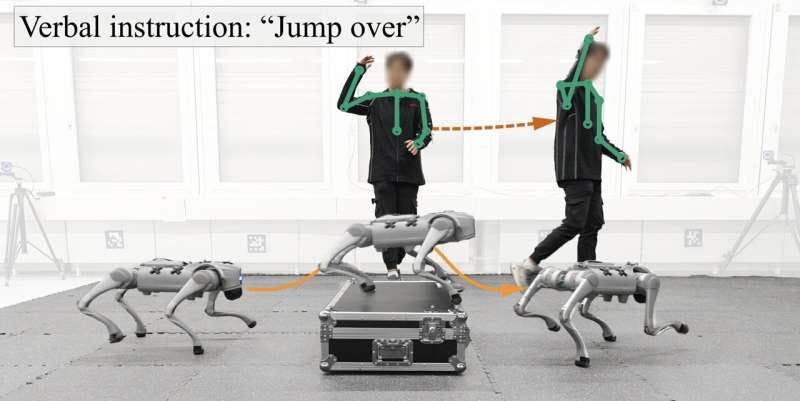
Researchers from Korea University, ETH Zurich, and the University of California, Los Angeles have unveiled a dog-training-inspired framework that helps legged robots learn new skills through natural human interaction. Instead of relying solely on simulation, the approach allows humans to teach robots using touch, gestures, and voice—much like training a dog with cues and guidance. After only a few real-world interactions, robots can practice independently in reconstructed simulation environments. Tested on a four-legged robot, the method enabled rapid learning of new behaviors with a 97% success rate, pointing toward more intuitive, adaptable robots for everyday settings.
No Brain, No Problem: What Robots Can Learn from Sea Stars
New research from USC reveals how sea stars achieve coordinated movement without a central brain — using decentralized control where each tube foot responds independently to local mechanical feedback. This bioinspired discovery could reshape robotics, enabling autonomous machines that adapt, recover, and navigate complex environments through distributed decision-making rather than centralized control. By translating nature’s resilient locomotion strategies into engineering principles, researchers are opening new possibilities for soft robotics, multi-contact mobility, and exploration systems designed for extreme environments on land, underwater, and even beyond Earth.
Robot Workforce Story Of The Week
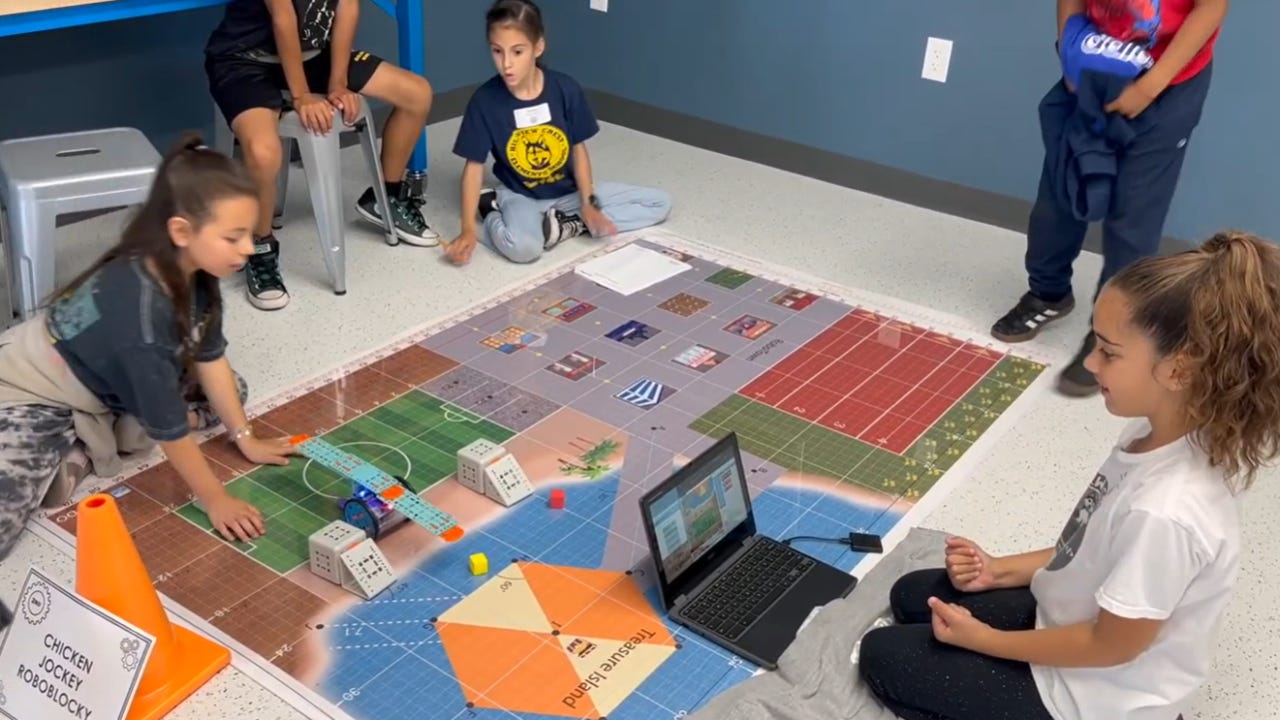
Op-Ed: Teaching mathematics with coding and robotics can transform California math instruction
Dr. Harry Cheng’s latest op-ed explores a bold vision for the future of math education — one where coding and robotics transform how students learn, engage, and succeed. As California rolls out a new math framework centered on real-world relevance and problem solving, Cheng argues that integrating computational thinking and hands-on robotics could be the key to closing achievement gaps and making math meaningful for all learners. Drawing on decades of research and compelling pilot results, the piece challenges traditional teaching models and presents a practical roadmap for turning policy into classroom impact. A must-read for educators, policymakers, and anyone interested in the future of STEM learning.
Robot Video Of The Week
Shout out to Bowen Weng, professor at Iowa State, and also chair of ASTM F45.06 Legged Robot Systems. Dr. Weng’s team is doing some amazing work that is advancing standards for legged robots.
Upcoming Robot Events
Mar. 16-19 Intl. Conference on Human-Robot Interaction (Edinburgh, Scotland)
Mar. 23-27 European Robotics Forum (Stavanger, Norway)
Mar. 29-Apr. 1 IEEE Haptics Symposium (Reno, NV)
Mar. 30-Apr. 2 Global Industrie (Paris, France)
Apr. 20-24 Hannover Messe (Hannover, Germany)
May 27-28 Robotics Summit & Expo (Boston, MA)
June 1-5 IEEE ICRA (Vienna, Austria)
June 22-25 Automate (Chicago, IL)
June 23-24 Humanoid Robot Forum at Automate Show (Chicago, IL)
Sept. 14-19 International Manufacturing Technology Show (Chicago, IL)
Sept. 27-Oct. 1 IROS (Pittsburgh, PA)
Oct. 6-8 Motek (Stuttgart, Germany)
Nov. 3-5 International Robot Safety Conference (Detroit, MI)
Love the story you are telling here. And funnily enough I begin to see our «facility manager» persona equivalent emerge the more I speak to farmers about our robot idea. I have to admit as well that the «dreamer» is someone I personally don’t really trust. Hope that’s a good sign 😬