

“Every generation revolts against its fathers and makes friends with its grandfathers.” - Lewis Mumford
Late one afternoon at Tokyo’s Haneda Airport, a humanoid robot stood beneath the open belly of a cargo aircraft and carefully moved a metal container from a dolly. The machine moved slowly, with the tentative precision of someone handling a heavy piece of furniture in a stranger’s home. Nearby, airport workers in reflective safety vests paused to watch. Some took photos. Others simply stared.
Japan Airlines had introduced the robot as a practical response to a practical problem. Japan’s workforce is shrinking. The country’s population is aging rapidly. Entire industries—from eldercare to logistics to aviation—are struggling to recruit enough workers to sustain operations. The robot, executives explained, was not arriving to eliminate labor but to preserve continuity. Without automation, some systems may simply become difficult to maintain.
And yet the scene carried a strange emotional weight far beyond airport logistics.
Because when people look at humanoid robots, they rarely see only machines.
They are seeing the future. Or at least a future someone else appears to be building on their behalf.
For the robotics industry, this may become the defining challenge of the coming decade. The technical barriers that once constrained robotics—battery life, perception, locomotion, manipulation, computing power—are steadily eroding. But another obstacle is emerging in their place: a growing societal skepticism toward automation itself. Not just concern about individual technologies, but suspicion toward the broader systems introducing them into daily life.
The robotics industry has spent years asking whether robots can work.
Increasingly, the public is asking whether the world surrounding the robots works for them.
The Machine in the Public Square
For most of industrial history, machines remained largely invisible to the average person.
The engines of industrialization existed elsewhere: inside factories, power plants, rail yards, ports, and warehouses. Industrial robots, when they arrived in the twentieth century, were similarly quarantined behind fences and safety cages. They belonged to specialized spaces populated by engineers, technicians, and operators.
The public encountered the outputs of automation, but rarely automation itself.
That boundary is disappearing.
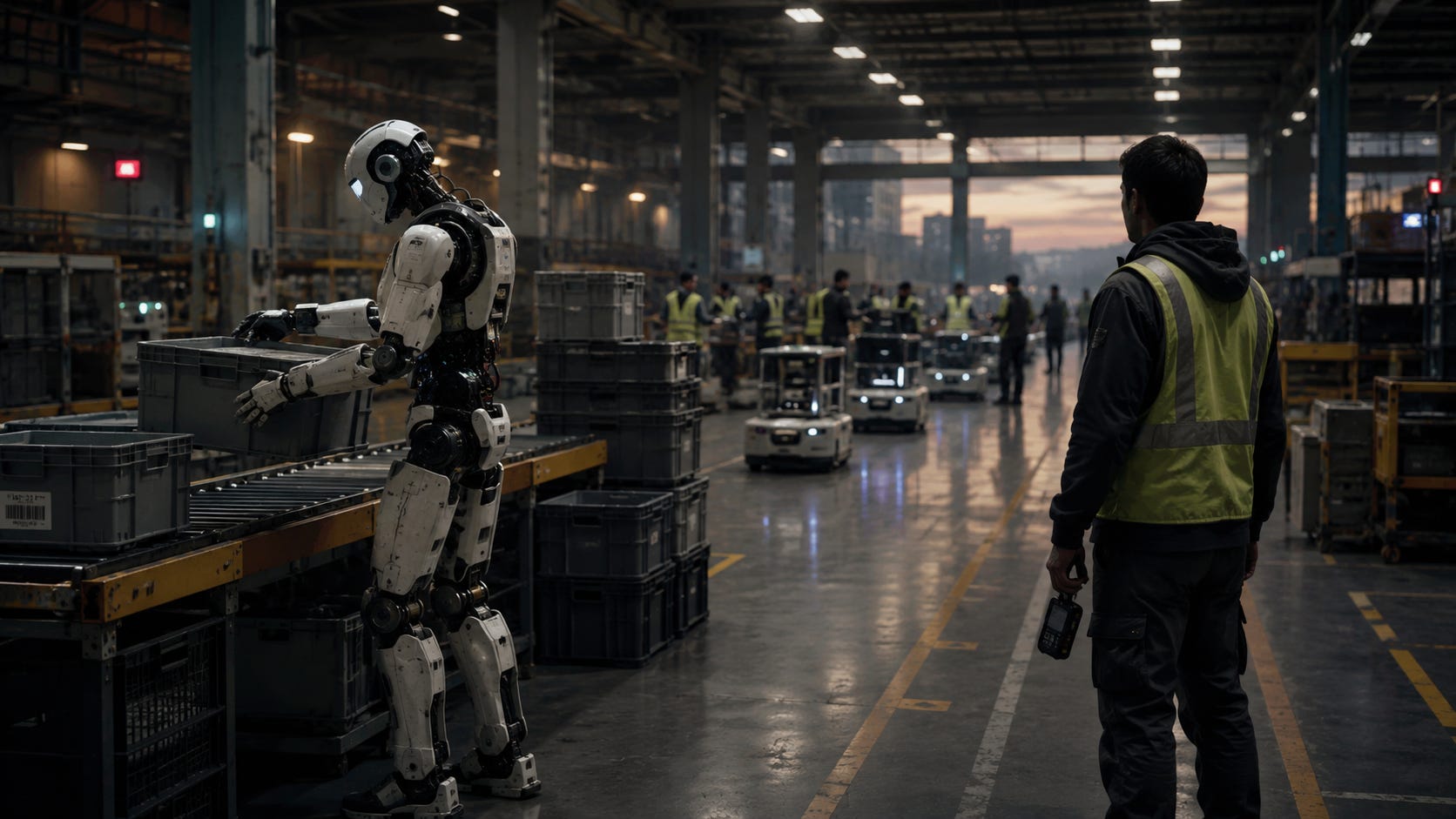
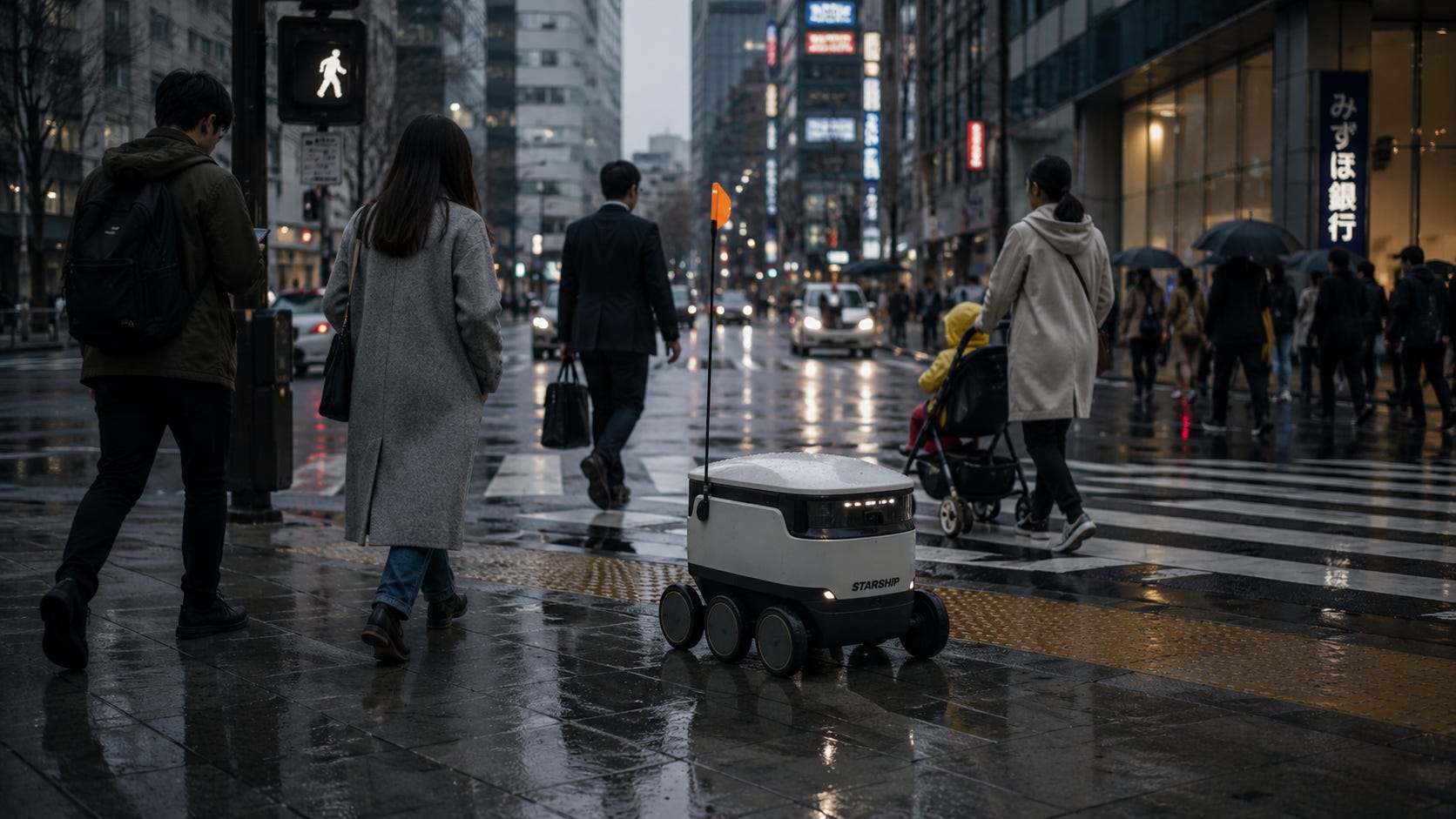
Now the machines roll through hotel hallways carrying towels. They patrol warehouses alongside human pickers. They deliver groceries across college campuses. Quadrupeds inspect industrial facilities. Sidewalk robots wait patiently at crosswalks. Humanoids appear in glossy demonstration videos carrying bins, folding shirts, climbing stairs, and performing rehearsed interactions with carefully smiling humans.
Robotics has entered the public square.
And the public square is where technologies stop being purely technical.
This transition has exposed a perception gap that much of the robotics industry still struggles to fully grasp. Engineers often view robots as systems defined by capabilities: payload capacity, degrees of freedom, perception stacks, inference speeds, grasping success rates, uptime metrics.
The public tends to view them narratively.
What does this machine mean?
What kind of society produces it?
Who benefits from it?
Who disappears because of it?
These are not technical questions, which is precisely why they are so difficult for the industry to answer.
The Return of the Luddites
The word “Luddite” has long functioned as a kind of insult—a shorthand for irrational hostility toward progress. In Silicon Valley, it is often deployed reflexively against skeptics of technological disruption, as though resistance itself were proof of ignorance.
The original Luddites were something else entirely.
In early nineteenth-century England, textile workers destroyed mechanized looms not because they were incapable of understanding the technology, but because they understood its implications all too well. The machines threatened wages, bargaining power, social status, and community stability. Industrialization was not arriving as a neutral force of shared prosperity. It was arriving unevenly, enriching some while destabilizing many others.
Two centuries later, the emotional architecture of that anxiety feels strangely familiar.
The modern neo-Luddite movement is not composed primarily of people demanding a return to pre-industrial life. Rather, it reflects a growing suspicion that technological progress and social progress have become uncoupled.
For decades, Western societies operated under a largely implicit bargain: technological advancement would improve living standards broadly enough that temporary disruption could be tolerated. Automation might eliminate certain jobs, but new industries would emerge. Productivity would rise alongside wages. Innovation would generate abundance.
Increasingly, many people no longer believe this bargain holds.
Factories automated and entire regions collapsed into economic stagnation. Gig-economy platforms introduced flexibility alongside precarity. Social media connected the world while degrading trust, privacy, and public discourse. Artificial intelligence now threatens not only manual labor but increasingly cognitive and creative work as well.
The result is not simply technological anxiety.
It is institutional exhaustion.
The Humanoid as Symbol
Humanoid robots intensify these tensions because they operate simultaneously as products and symbols.
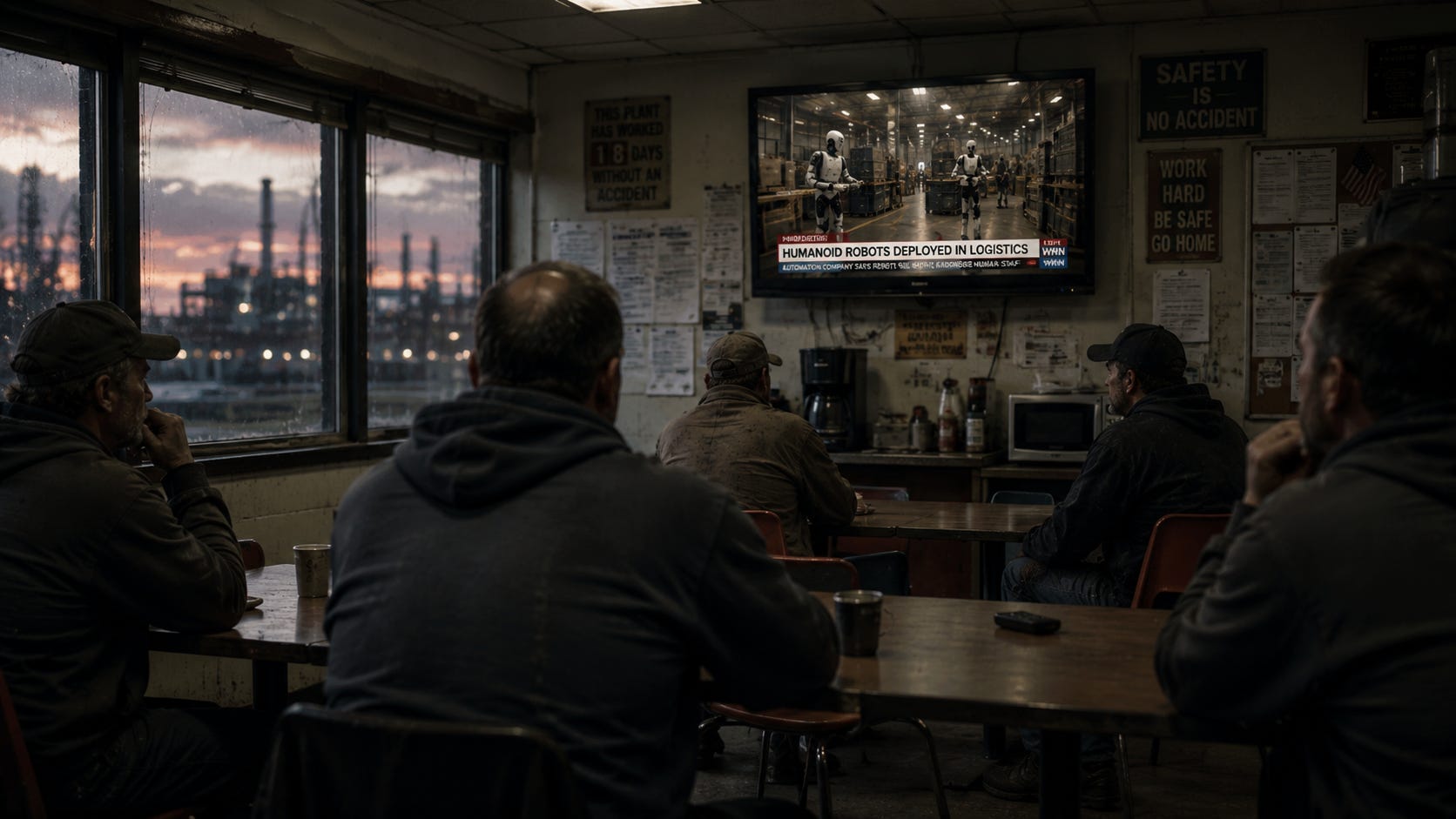
A robotic arm inside an automotive plant rarely inspires existential reflection. A humanoid robot carrying boxes inside a warehouse often does. The difference is partly visual, partly psychological. Humans instinctively interpret anthropomorphic machines socially, even when the machines themselves possess no social understanding whatsoever.
The humanoid becomes less a tool than a cultural object.
People project onto it decades of science fiction, labor anxiety, economic insecurity, and philosophical discomfort. A humanoid unloading cargo is not merely unloading cargo. It is participating in a much larger cultural argument about replacement, dignity, labor, intelligence, and human uniqueness.
This helps explain why the robotics industry’s messaging often feels strangely disconnected from public reaction.
Engineers talk about reinforcement learning, actuator efficiency, and generalized manipulation. Online audiences respond with fears of unemployment, dystopia, surveillance, or social collapse. The two groups are often having entirely different conversations.
The industry frequently assumes resistance emerges because the public does not understand the technology well enough.
But in many cases, people understand exactly what troubles them.
They understand that automation historically redistributes power before it redistributes prosperity.
The Seduction of Spectacle
Complicating matters further is the modern media environment surrounding robotics.
A century ago, industrial transformation unfolded gradually and often invisibly. Today, every prototype demonstration becomes content. Humanoid robots dance, backflip, sort packages, cook meals, and interact awkwardly with humans before millions of viewers online. Venture capital rewards ambitious narratives. Social-media algorithms reward spectacle. News headlines routinely oscillate between utopian promises and apocalyptic warnings.
The result is a peculiar distortion field around robotics itself.
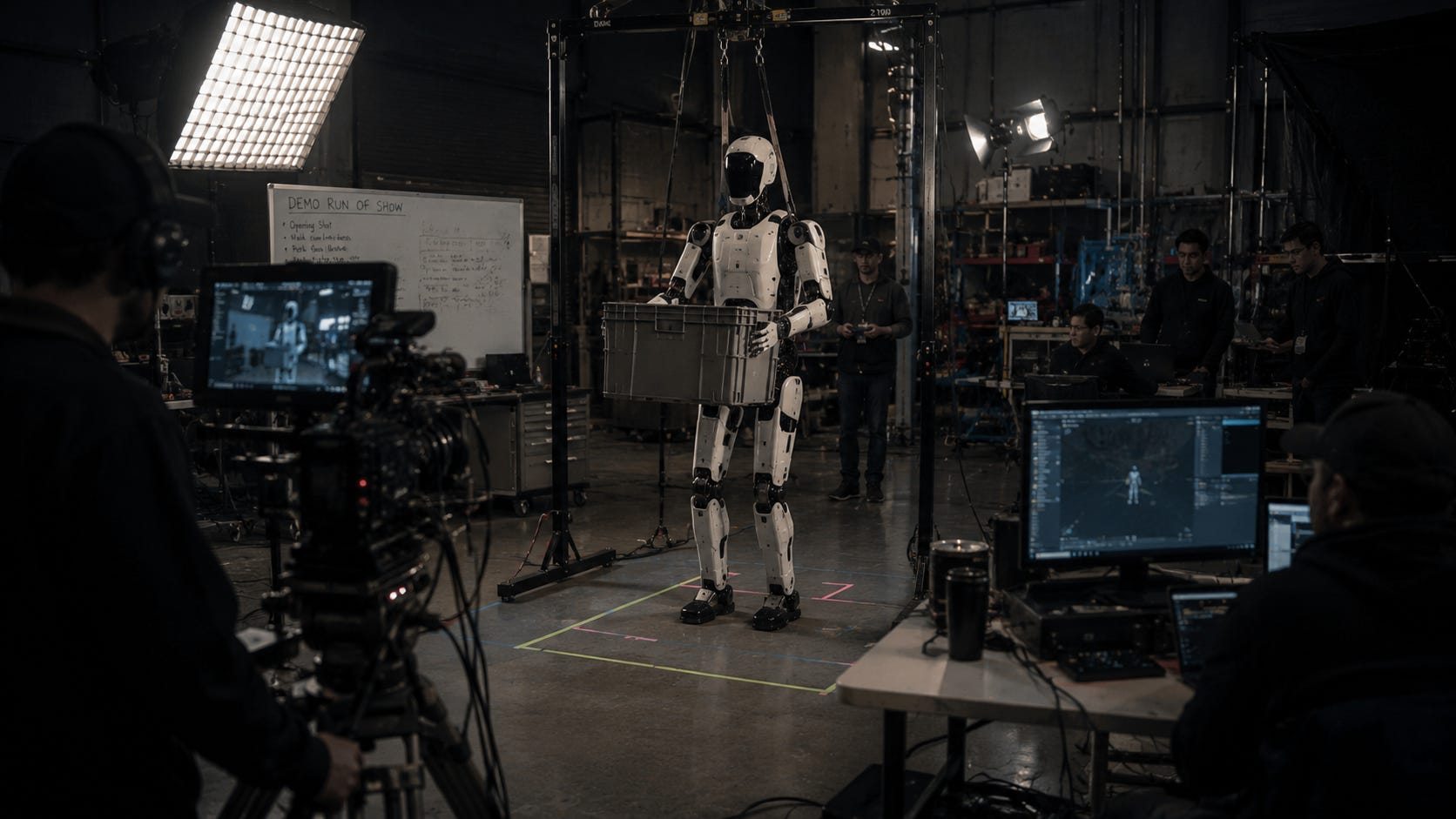
The public often encounters robotics not through ordinary operational deployments but through carefully staged glimpses of the future. A sixty-second demonstration video can imply technological maturity far beyond reality. Hidden operators, constrained environments, scripted routines, and extensive supervision disappear behind cinematic editing and triumphant music.
The industry sometimes markets inevitability faster than society can emotionally absorb it.
And inevitability is precisely what generates backlash.
People tend to tolerate technological disruption when they feel agency over the process. They resist when change feels imposed, accelerated, or governed by distant institutions operating beyond public accountability.
This is one reason robotics debates increasingly sound less like engineering discussions and more like political arguments.
Because they are political arguments.
The Crisis Beneath the Crisis
What robotics companies increasingly face is not merely skepticism about machines, but skepticism about the systems deploying them.
Who owns the robots?
Who captures the productivity gains?
What happens to displaced workers?
Who governs failure?
Who is liable when autonomous systems cause harm?
Who decides where robots operate?
Who benefits from data collection in public spaces?
These concerns are not peripheral to robotics adoption. They are becoming central to it.
The irony is that many of the sectors most aggressively pursuing automation are doing so because they face legitimate structural pressures. Aging populations, labor shortages, dangerous working conditions, healthcare strain, and supply-chain fragility are all real problems. In some industries, automation is emerging less from greed than from necessity.
Japan illustrates this tension vividly. So do eldercare systems in Europe. So do logistics networks struggling to recruit workers for physically punishing jobs. So do disaster-response environments where robots can enter spaces humans cannot safely survive.
The machines are arriving because many societies increasingly need them.
But necessity alone does not generate trust.

The Politics of Legitimacy
Perhaps the deepest miscalculation in parts of the robotics industry has been the assumption that public acceptance naturally follows technical usefulness.
History suggests otherwise.
Nuclear energy offered extraordinary technical potential. Public trust fractured. Genetically modified crops increased agricultural productivity. Public skepticism persisted. Social-media platforms initially promised connection and democratization before becoming associated with surveillance, polarization, and manipulation.
Technological capability and social legitimacy are separate things.
The future of robotics may depend less on whether companies can build increasingly capable systems than on whether societies believe the deployment of those systems aligns with broader human interests.
This is why governance, standards, insurance, labor transition planning, liability frameworks, and public engagement are rapidly becoming strategic issues rather than bureaucratic afterthoughts. The robotics industry often speaks as though regulation is what arrives after innovation.
In reality, regulation is increasingly becoming part of the infrastructure required for innovation itself.
Trust has become a deployment dependency.
The Future People Fear
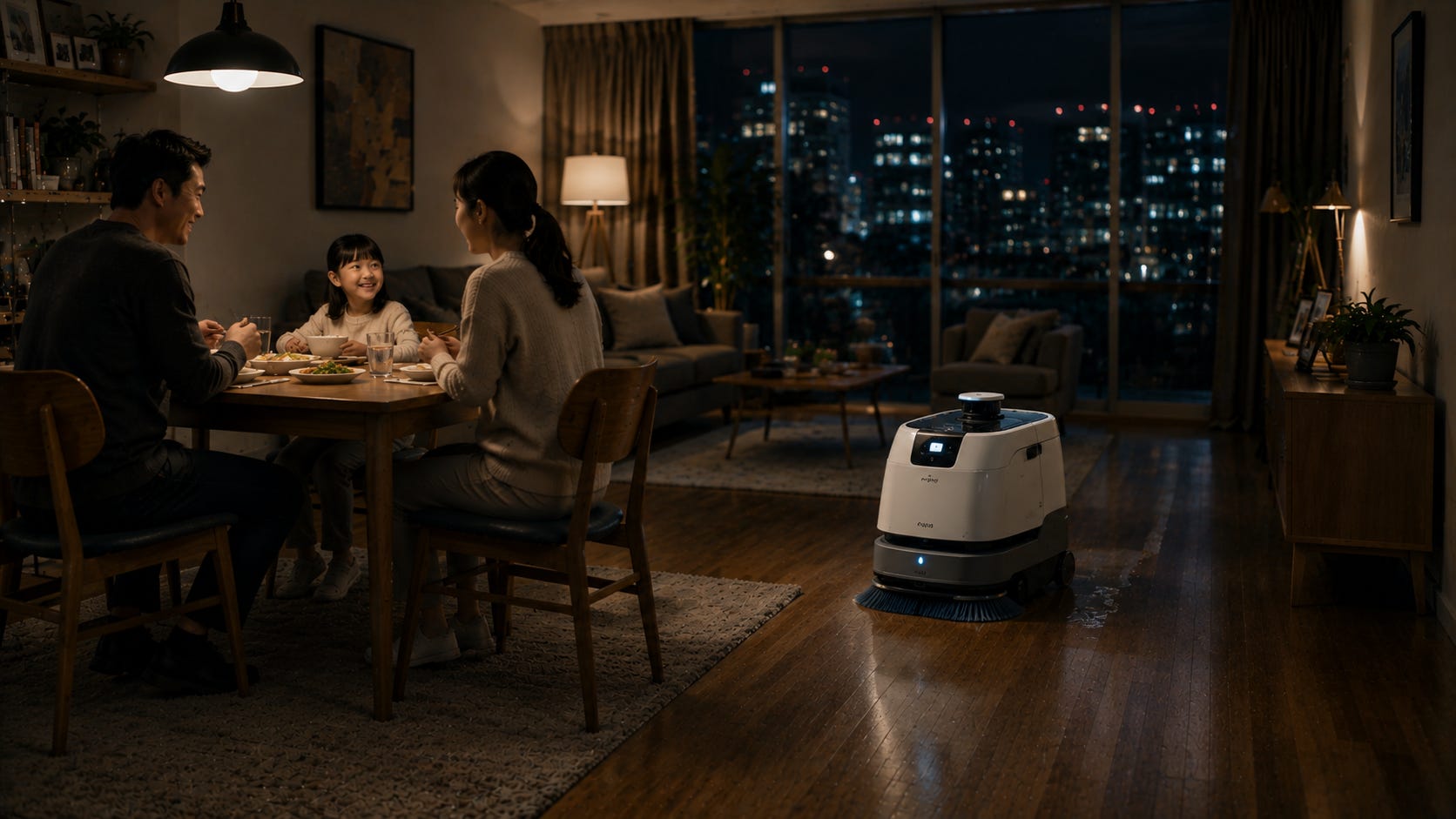
The rise of neo-Luddism ultimately reflects a deeper uncertainty about what kind of future automation is creating.
A future where productivity rises while stability declines.
A future where labor becomes increasingly disposable.
A future where technological systems are owned by smaller and smaller concentrations of capital.
A future where humans slowly lose not only physical tasks, but cognitive and creative ones as well.
And yet the paradox is that robotics may also become essential to preserving many aspects of modern society. Aging nations will likely require automation to sustain healthcare systems, logistics networks, food production, infrastructure maintenance, and industrial capacity. Hazardous work environments will continue demanding robotic intervention. Disaster response will increasingly depend on autonomous systems.
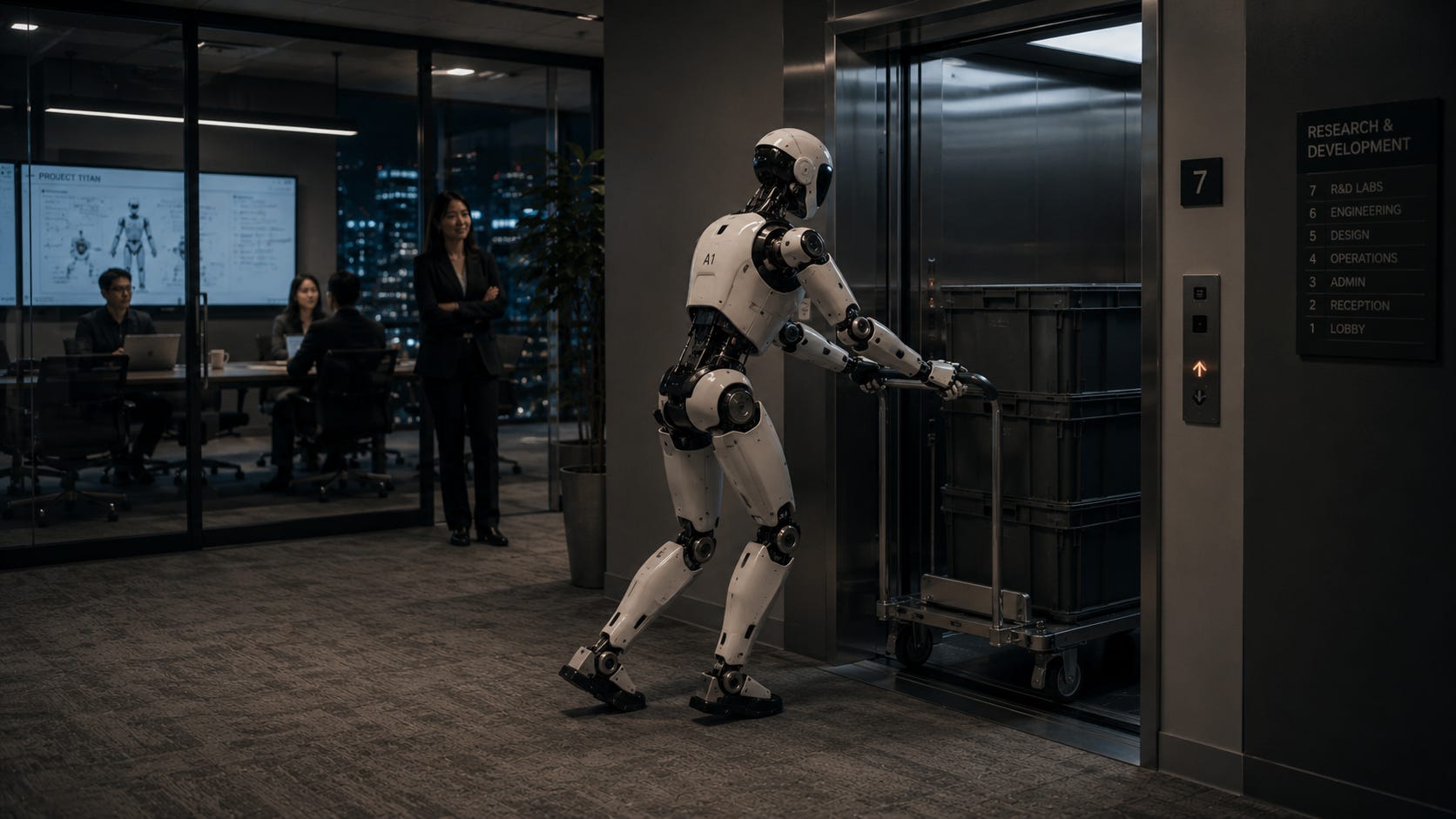
The question is no longer whether robots are coming.
The question is whether societies can build political, economic, and cultural institutions capable of integrating them without tearing apart public trust in the process.
Because the greatest obstacle facing robotics may not be technological limitations at all.
It may be whether people still believe technological progress serves them.
Robot News Of The Week
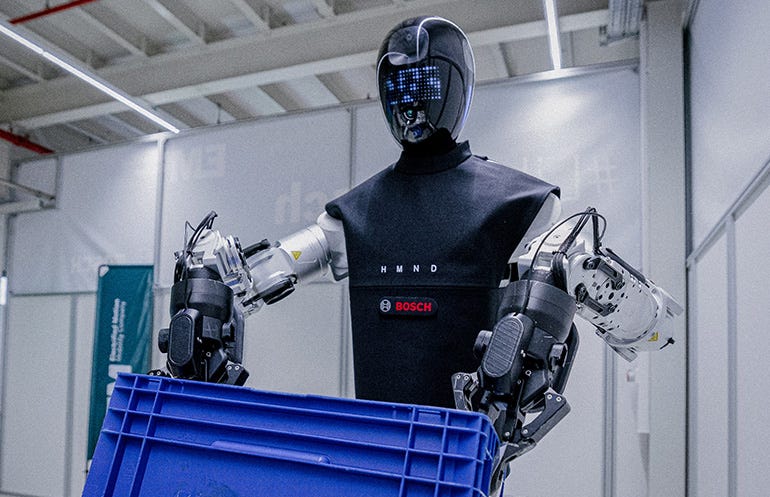
Humanoid partners with Bosch, Schaeffler to scale robot production
Humanoid robotics is rapidly moving from flashy demos to industrial scale-up. London-based Humanoid has partnered with Robert Bosch GmbH and Schaeffler Technologies AG to manufacture and deploy thousands of wheeled humanoid systems across Europe. The partnerships signal a major shift in the humanoid race: success may depend less on viral robot videos and more on industrialization, manufacturability, supply chains, and integration into real factory workflows. With Bosch providing large-scale manufacturing expertise and Schaeffler preparing live deployments, the humanoid sector is beginning to confront its next major challenge — scaling from prototype theater to operational infrastructure.
Locus Robotics Acquires Nexera, Bringing Advanced Grasping to Mobile Manipulation Platform
Locus Robotics has acquired Vancouver-based Nexera Robotics, integrating its patented NeuraGrasp end-effector technology into the Locus Array mobile picking platform. The AI-driven soft gripper handles difficult SKUs like textiles, polybags, and irregular items, significantly expanding what Locus Array can autonomously pick across warehouse fulfillment workflows. Rollout begins in the coming months.
Robot Research Of The Week
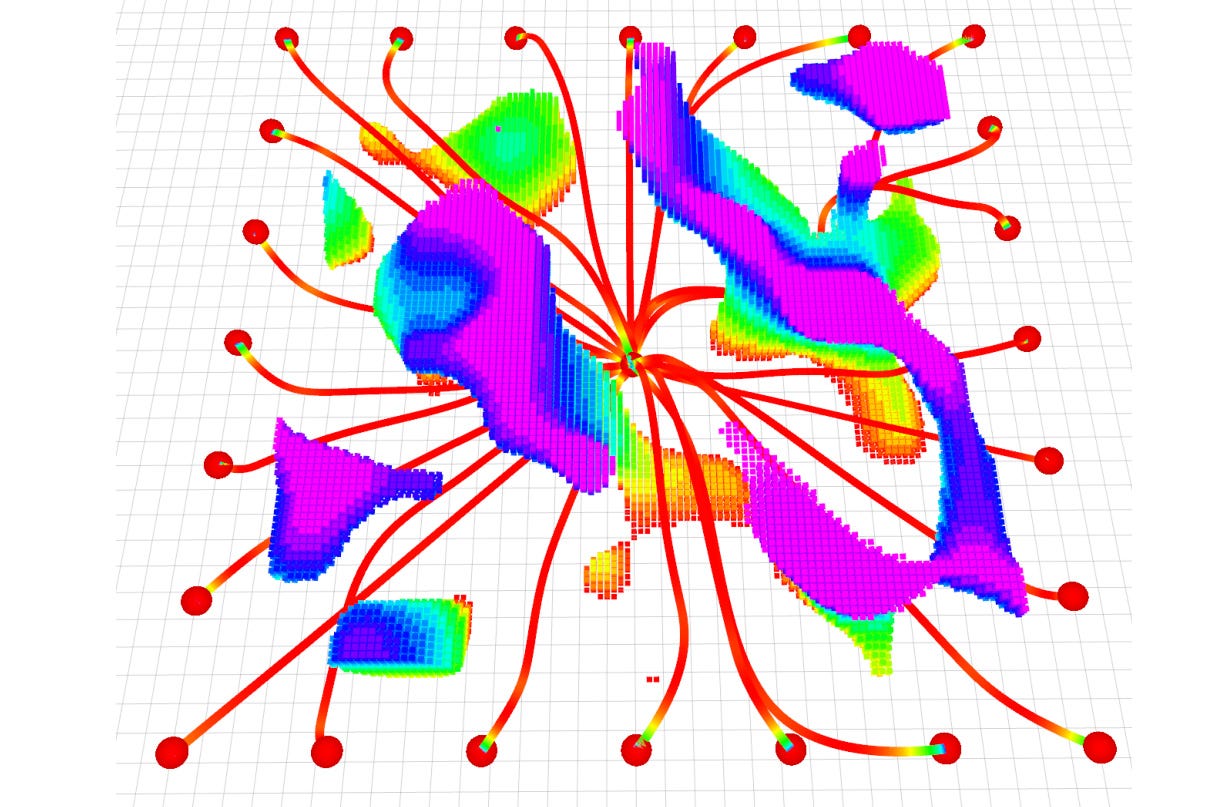
New research enables a robot to chart a better course
Researchers at Massachusetts Institute of Technology and the University of Pennsylvania have developed an open-source trajectory-planning system that allows autonomous drones to rapidly navigate dangerous, unpredictable environments while maintaining smooth, efficient flight paths. Called MIGHTY, the system enables UAVs to react to obstacles in milliseconds using only onboard computing and sensors, potentially improving applications ranging from disaster response to industrial inspection and urban delivery. The project also highlights a growing push within robotics toward high-performance open-source tools that lower barriers to advanced autonomy research and deployment.
Robotic ‘matter’ flows, adapts through mechanical intelligence
Researchers at Cornell University have developed a robotic collective that behaves less like a traditional machine and more like a living material. Instead of centralized control, dozens of small robots self-organize through simple physical interactions, flowing, reshaping, and adapting to obstacles like an active gel or swarm organism. The “Cross-Link Collective” demonstrates how mechanical intelligence — encoded directly into physics and contact dynamics — can produce resilient emergent behavior without heavy computation. The work hints at a future where robotic systems may function less like individual robots and more like adaptive matter capable of surviving uncertain, dynamic environments.
Robot Workforce Story Of The Week
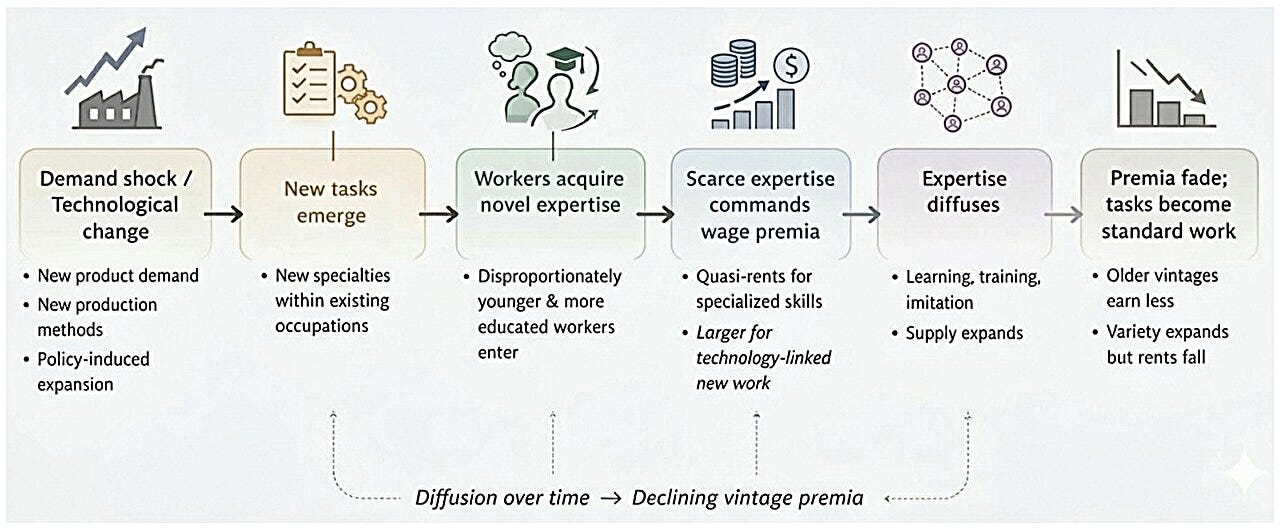
Technology usually creates jobs for young, skilled workers. Will AI do the same?
A new study led by MIT economist David Autor suggests that technology does not simply eliminate jobs — it continuously creates entirely new forms of work. The research found that emerging occupations disproportionately benefit younger, highly educated workers in urban areas, while government-driven investment plays a major role in generating new industries and expertise. The findings arrive as AI and robotics fuel fears of widespread automation, but the study argues the real question is not whether technology destroys work — it is who gains access to the new opportunities created afterward, and whether society actively shapes where those opportunities emerge.
Robot Video Of The Week
Meanwhile in San Francisco….
Upcoming Robot Events
May 27-28 Robotics Summit & Expo (Boston, MA)
June 1-5 IEEE ICRA (Vienna, Austria)
June 22-25 Automate (Chicago, IL)
June 23-24 Humanoid Robot Forum at Automate Show (Chicago, IL)
July 7 Machina Summit (Paris)
Aug. 17-21 IEEE Intl Conf. on Automation Science & Engineering (Shenyang, China)
Sept. 14-19 International Manufacturing Technology Show (Chicago, IL)
Sept. 15-17 AI Infra Summit (Santa Clara, CA)
Sept. 22-24 ROSCon Global (Toronto, Ont.)
Sept. 27-Oct. 1 IROS (Pittsburgh, PA)
Oct. 6-8 Motek (Stuttgart, Germany)
Oct. 14-15 Natural Disaster Expo (Houston, TX)
Nov. 3-5 International Robot Safety Conference (Detroit, MI)
Nov. 9-13 International Conference on Telepresence (Bristol, UK)
Mar. 2-4 European Robotics Forum (Birmingham, UK)
This is such a great observation! I am building a farming robot and I am convinced we need to change the way we produce food and that the only way to do so is automation. I still wonder about the risk you write about: what’s the broader impact on society, who benefits and who is left out?